Troubled Projects: Getting Back on Track Before Value Slips Away
Every organization experiences it sooner or later. The project looked perfect on paper, but somehow drifted off course.
Deadlines slipped. Costs spiraled. Teams lost direction. Stakeholders started to doubt the outcome.
The difference between recovery and failure often lies in how quickly leaders can recognize the warning signs and act decisively.
How do you rescue a project that’s gone off the rails, before it damages outcomes, budgets, or credibility?
With a structured, time-sensitive recovery process that restores control, confidence, and performance.
PM Solutions’ Troubled Project Review & Recovery framework delivers fast, measurable turnaround by helping organizations:
- Pinpoint the real causes of failure—not just the visible symptoms
- Stabilize quickly by freezing scope changes, realigning leadership, and reestablishing accountability
- Rebuild a realistic plan with clear priorities, achievable milestones, and renewed team focus
- Drive sustained improvement by embedding recovery lessons into PMO governance and culture
The result: projects are brought back on track, stakeholder confidence is restored, and the organization emerges stronger, more resilient, and better equipped to prevent future failures.
Why Projects Fail
Systemic Causes, Not Isolated Mistakes
Troubled projects rarely collapse because of one decision.
They deteriorate over time through a series of compounding gaps, including invisibility, communication, accountability, or capacity.
Common root causes of project failure include:
- Lack of enterprise-wide visibility: Project teams operate in silos without a portfolio context.
- Reactive management culture: Issues are reported after they occur instead of being anticipated.
- Weak sponsorship: Projects lack decisive executive ownership and escalation pathways.
- Unrealistic scope and planning: Ambition exceeds available time, budget, or resources.
- Skills and competency gaps: Technicians are promoted into leadership without structured development.
A proactive PMO can detect many of these issues early, but once a project enters distress, objectivity and speed are essential to minimize losses and recover value.
The Anatomy of a Troubled Project
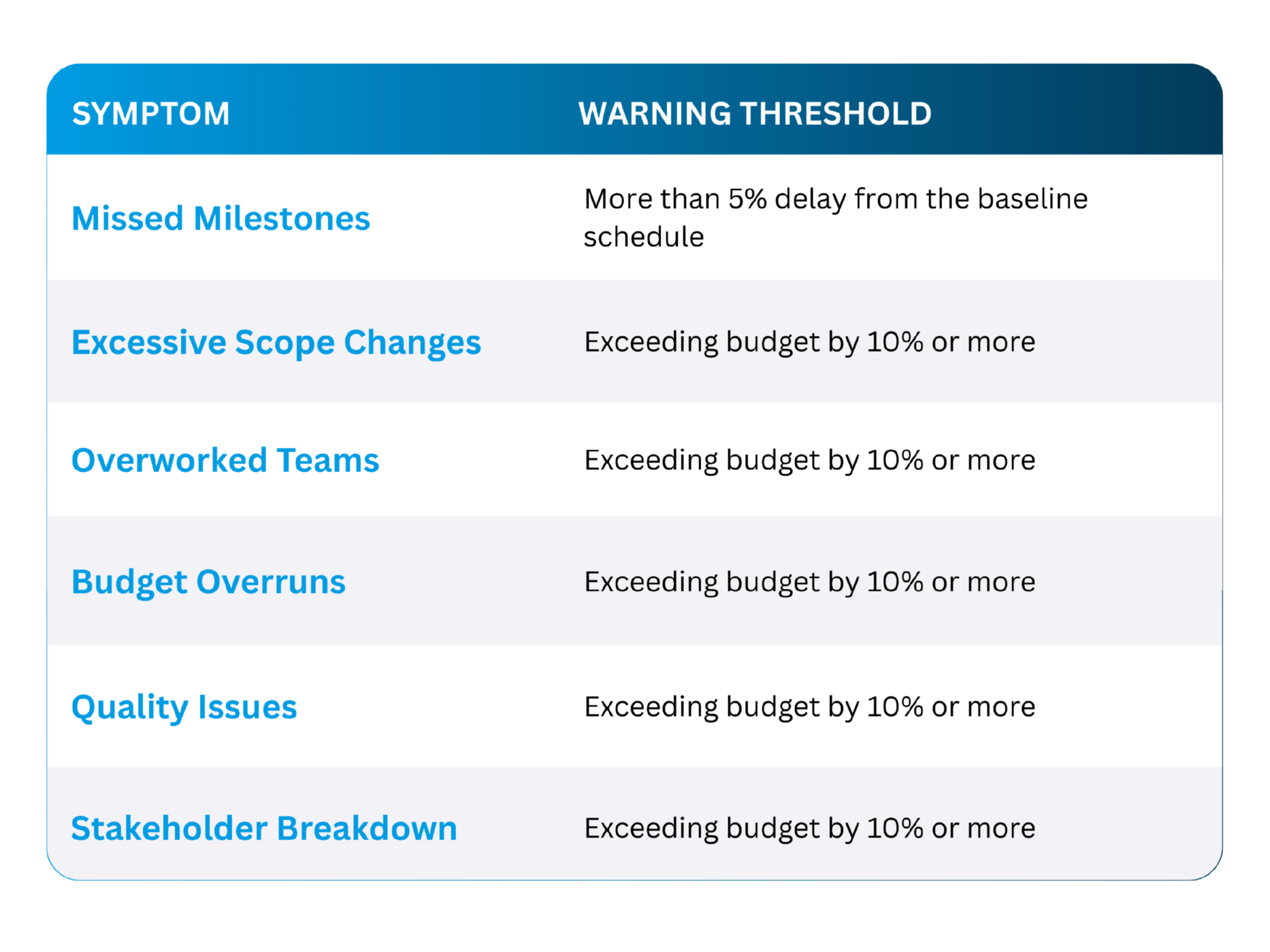
Certain indicators consistently signal when a project is heading toward failure.
Recognizing them early gives leaders a crucial window to intervene effectively.
When several of these symptoms appear together, it’s time for a structured review.
Diagnosing the Damage
When projects falter, internal teams are often too close to the problem to see its true shape. A project review brings in a fresh, expert perspective — examining the project from strategy to execution.
PM Solutions conducts a comprehensive diagnostic review that examines:
- Scope control and governance maturity
- Resource alignment and skill adequacy
- Decision-making cadence and escalation clarity
- Communication flow and stakeholder management
- Risk tracking, dependencies, and mitigation plans
The result is a factual, executive-ready assessment that outlines both the root causes and the immediate actions required to stabilize the project.
Project Recovery
From Red to Green
PM Solutions’ experience across industries points to five interventions that consistently restore performance and trust.
1. Rebuild Communication and Stakeholder Alignment
Clarify decision rights, create transparent reporting, and reestablish confidence among sponsors.
2. Redefine the Project Scope and Objectives
Refocus effort on essential deliverables that support the original business case.
3. Reallocate and Right-Size Resources
Ensure the right skills and capacity are applied where they matter most.
4. Resolve Technical and Process Blockers
Eliminate integration, performance, or quality barriers that impede progress.
5. Reset Leadership if Necessary
Introduce fresh leadership or external experts when neutrality and decisive direction are required.
After Project Recovery
The PMO’s Role in Preventing Future Failures
Once a project is recovered, the focus shifts to prevention.
Mature PMOs build resilience by embedding recovery principles into everyday governance:
- Portfolio-wide performance tracking and reporting
- Consistent escalation and decision pathways
- Competency-based staffing and training for project managers
- Standardized methods for scope, schedule, and quality control
- Enterprise-level risk and dependency management
A PMO that integrates these capabilities not only reduces failure rates but builds organizational confidence in every project it oversees.
Case Study Highlight
Turning Around an HR Transformation Program
A global automotive manufacturer launched an HR transformation program aiming to reduce $20 million in annual service costs. Eight months in, none of the 15 projects were meeting milestones, and the initiative was in crisis.
PM Solutions was engaged to perform a full Project Review & Recovery. Within weeks, the team redefined requirements, milestones, and resource allocations.
Result: Within seven months, HR expenses dropped from $20 million to $6.8 million annually, with continued savings projected.

FAQs
What are the first signs a project is heading for trouble?
Frequent schedule slippage, inconsistent reporting, or increasing scope changes are red flags. If your leadership meetings focus on explanations rather than progress, it’s time for a review.
How fast can a recovery start delivering results?
Many recoveries stabilize in 30–45 days, with measurable progress by the next reporting cycle.
Can a recovery succeed without changing the project team?
Sometimes yes, but often recovery requires external facilitation or new leadership to reset accountability and pace.
What happens after project recovery?
The final phase includes lessons learned, process improvements, and coaching to prevent recurrence — turning short-term fixes into lasting discipline.
How do we maintain project health going forward?
Embed regular health checks, clear escalation paths, and portfolio oversight into your PMO’s core processes to sustain success.